Strengthening Coffee Livelihoods in Honduras: IHCAFE's Vision for Living Incomes
In an interview with the Technical Assistant Manager, Nestor Javier Meneses explains how the Instituto Hondureño del Café (IHCAFE) is partnering with smallholders to build more productive, resilient farms and better futures for coffee-growing families.
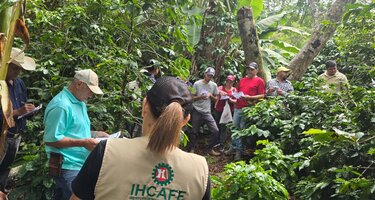
The pursuit of Living Incomes in the coffee sector requires deep collaboration with national institutions that understand local realities. In Honduras, the Instituto Hondureño del Café (IHCAFE) acts as the technical implementing body for the country’s coffee-related policies, working directly with producer families through 50 extension agencies across the country. Through their partnership on the German Retailers Working Group’s project on Living Incomes in the Coffee Sector, IHCAFE adds decades of research expertise, field extension networks, and a commitment to sustainable, competitive, and inclusive coffee cultivation.
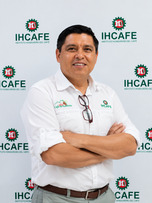
We spoke with Nestor Javier Meneses, Technical Assistant Manager from IHCAFE, to learn about IHCAFE’s perspective on Living Incomes, the opportunities that this project represents for the Honduran coffee sector, and how their experiences can contribute to broader systemic change.
What is IHCAFE’s role in the Honduran coffee sector?
IHCAFE: IHCAFE is the technical implementing body for the country’s coffee-related policies and works to promote sustainable, competitive and inclusive coffee farming. A key part of its work is to generate knowledge through research and transfer it directly to farming families via its extension teams. It currently has 50 extension agencies, whose technicians work with producers using methodologies such as Field Schools. In addition, it carries out research in areas such as genetic improvement, integrated pest management, good processing practices, agronomic management and coffee tree nutrition.
What does the concept of a living income mean from IHCAFE’s perspective?
IHCAFE: IHCAFE, the ultimate aim is to help improve the living conditions of farming families. This involves increasing the productivity and profitability of farming units but also ensuring that incomes are sufficient to provide a decent standard of living for coffee-growing families. Therefore, in addition to transferring technical knowledge, alternatives for income diversification are promoted, both within coffee production and through other activities that strengthen families’ finances.
What opportunity does the ‘Living Incomes’ project represent for the Honduran coffee sector?

IHCAFE: The project represents an opportunity to support farming families in improving their incomes and strengthening their farms, making them more productive, sustainable and resilient in the face of the current challenges facing the coffee industry. One of the key focuses is the “renew without stopping production” strategy, which involves improved plantation management, fertilization, pruning, agroforestry and plant health management, amongst other practices aimed at restoring and increasing productivity. However, improving incomes does not depend solely on producing more coffee. It also involves better management of farm resources, reducing costs, keeping records and developing diversification options. In this process, the participation of women and young people is essential to generate new opportunities and contribute to generational renewal in the sector.
How does IHCAFE envisage the possibility of scaling up or continuing this initiative?

IHCAFE: The intention is that the experiences gained through participating organizations can become models that are subsequently replicated in other regions of the country. IHCAFE’s network of technicians, research centers and training facilities provides an opportunity to share the knowledge and experience gained. The aim is for these capabilities to remain within the organizations and farming families beyond the duration of the project. In this way, the project aims to leave behind a consolidated and scalable model for improving productivity and diversifying income, which will help to strengthen the Honduran coffee sector by providing better opportunities for farming families and future generations
The activity took place within the framework of the project “Towards Living Incomes in the Honduran Coffee Sector”.