From Knowledge to Credits: Scaling Climate-Smart Cotton Production
The growth of carbon credits creates a three-fold opportunity: additional income for smallholder farms, tradable certificates for buyers to offset carbon, and growth of the platforms and infrastructure providing these credits. For investors, this will deliver social and strategic returns.
From Risk to Return: De-risking the Agri-Food Sector
The agri-food sector offers immense potential for impact, yet it remains one of the riskiest asset classes due to volatile climate and market conditions. While this uncertainty often freezes capital flow, development agencies are funding investment-ready solutions that can bridge the gap.
Driven by the need for precise resource efficiency, development agencies like GIZ are now deploying data-driven innovations that serve as a "risk-mitigation layer" for private capital. By leveraging quantifiable data and foresight tools, we are transforming high-risk agricultural projects into validated, scalable assets.
This series presents a curated selection of these de-risked opportunities, implemented by the Fund for the Promotion of Innovation in Agriculture (i4Ag), as part of the Sustainable Agricultural Supply Chains Initiative (SASI), and funded by the German Federal Ministry for Economic Cooperation and Development (BMZ).
An Invitation to Investors
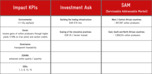
The global textile sector faces urgent pressure to ensure supply chain compliance and decarbonize production. This pressure is driving the global carbon credit market. This market (carbon offset / carbon credit) is projected to grow from USD 414.8 billion in 2023 to USD 1,602.7 billion by 2028, at a compound annual growth rate (CAGR) of around 31.0%.1 The growth of carbon credits creates a three-fold opportunity: (1) additional income for smallholder farms, (2) tradable certificates for buyers to offset carbon, and (3) growth of the platforms and infrastructure providing these credits.
Concurrently, these actors are able to promote sustainable soil health and fairness in the cotton trade: The Fund for the Promotion of Innovation in Agriculture (i4Ag) has been supporting an innovation where digital infrastructure is matched with on-the-ground asset generation to capitalize on this demand. Under this innovation, the software developer bizpando AG is currently developing a carbon removal documentation platform to generate carbon credits specifically for the cotton market. Whereas the International Cotton Advisory Committee (ICAC) guides the project technically, the Aid by Trade Foundation (Cotton made in Africa initiative, CmiA) joined forces to scale the adoption of biochar, thereby promoting and operationalizing climate-smart solutions into sustainable opportunities for CmiA-verified farmers in Cameroon. At the same time, the Gesellschaft für Internationale Zusammenarbeit (GIZ) GmbH is accelerating the production of biochar. Biochar is enriched with organic fertilizer and is a means of improving stable soil health and sustainably increasing yields. It thus sets the basis for the sale of the carbon currency. To scale this innovation, further investment partners are being sought.
Entry Point for Investors
The compliance platform got the endorsement by Carbon Standard International and is ready for operation, and the sustainable agricultural practice shows promising evidence (average yield increase of 118% on trial plots). What is missing is an investment partner for the implementation of the appropriate infrastructure (digital verification and payment), and scaling of the asset generation of biochar through training and user onboarding.

'Biochar is the big brother of organic fertilizer. I've already tried used both, last year even side by side. And I found a big difference between both parts. […] Production with biochar was very high: the bolls from the fertilised field were 4.5 grams. And when I went to the field where I applied the biochar, I found that they were 8.2 grams. Almost double! When I converted the 100 m2 into a hectare, that means I had 3.2 tonnes per hectare.'
Andoula Fanglo, cotton farmer in North Cameroon
The Infrastructure Gap (CapEx)
In order for carbon credits to be traded in the voluntary certificate market from 2026 on, the establishment of the digitized monitoring, reporting and verifying system is a prerequisite. This includes surveying the cultivation areas with GPS data, photographic documentation of cotton production, and registering the cotton harvest on the platform. In addition, independent Certified Verifiers were deployed to check the digital system. These steps would enable Carbon Standards International's currently planned certification to the Global Artisan C-Sink Standard.
To ensure that the producers are paid directly through the sale of carbon certificates, the platform must be linked to the mobile money system prevailing in the respective country – i.e. the digital payment system that explicitly works without intermediaries. The implementation of this infrastructure can be realized with an investment of EUR 0.75 million.
Scaling & Unit Economics (OpEx)
In order for the platform to be attractive for the trade with as many certificates as possible, the efficient dissemination of knowledge on the production of biochar made from cotton stalks, and thus the binding of soil carbon and savings in CO₂ emissions is required. As an experienced player in international cooperation, GIZ relies on a cascade system in which more than 60 consultants currently distribute the training to 3,000 CmiA-verified lead farmers. By April 2027, a total of around 45,000 farmers are expected to be reached in Cameroon. For long-term anchoring, the process will be institutionalized with the national cotton company SODECOTON and other national advisory systems. The cost of scaling knowledge transfer is currently estimated at EUR 25 per person trained. This invoice covers both personnel and the procurement of material goods, such as IT or training materials.
The Investment Potential
The success of the project is measured by higher and more stable yields, the sequestration of soil carbon (~3 t CO₂-eq ha⁻¹ yr⁻¹ potential), and a permanently increasing income – through increased harvests, but also through the monetization of CO₂ certificates.
Initial calculations from Cameroon show, that 1,000 cotton farms cover an average cultivation area of around 1 hectare. Assuming a potential of about ~3 t CO2 equivalents per hectare and year, this results in an estimated compensation effect of around 3,000 t CO2 eq per year. Reaching 45,000 CmiA-verified smallholder farms by 2027 through GIZ and its partners, would correspond to a combined cultivation area of around 45,000 hectares. Under the same potential assumption, around 135,000 t CO2 equivalents per year could be compensated.
As soon as sufficient data and learning experiences are available after the second cotton campaign, the model can be extended to other countries in the Global South at any time. According to the International Cotton Advisory Committee (ICAC), around 1,956,524 more cotton producers could be reached in East, Southern and North Africa, and another 957,597 in West and Central Africa.
This innovation offers a combination of proven agricultural impact and digital scalability. We are currently securing partners to support EUR 1 mio. in infrastructure and training, needed to scale this innovation. For an investor, this capital will deliver social and strategic returns:
- Scale carbon credits: The completed infrastructure unlocks the verification of ~135,000 tons of CO₂ equivalent credits per year (based on the 2027 target of 45,000 hectares).
- Improve revenue for farmers: Pilot data shows, that the methodology delivers a 118% yield increase for farmers, thus doubling their economic resilience.
- Provide strategic access for buyers: Partners will gain "first-mover" status in a fully digitized, compliance-ready supply chain ahead of tightening global regulations.
Interested? For more information on cooperation options, please read here: Cooperations – SASI or write to us: sasi-businessdevelopment@giz.de.
Further information on the project, the production and functioning of biochar enriched with organic fertilizer can be found here: Climate Resilience of Smallholder Cotton Farmers
The project in Cameroon has been commissioned and financed by the German Federal Ministry for Economic Cooperation and Development (BMZ). It is part of the Fund for the Promotion of Innovation in the Agricultural and Food Sector (i4Ag) and is implemented by the Deutsche Gesellschaft für Internationale Zusammenarbeit (GIZ) GmbH and its partners ICAC, CIRAD and SODECOTON.
Information Box
SDGs:
- SDG 1 (Additional Income) – productivity, farmer incomes.
- SDG 2 (Zero Hunger) – productivity, farmer incomes.
- SDG 8 (Decent Work) – working conditions for farmers.
- SDG 13 (Climate Action) – carbon sequestration, reduced burning.
- SDG 15 (Life on Land) – soil health, biodiversity.
Value Chain: Cotton, Carbon Credits
Current Geography: North Cameroon
Potential Geography: North, South and East Africa
Lifecycle Stage: Growth Stage
Implementing Partners:
- SODECOTON, Scaling & Demand Partner – Semi-public cotton company
- IRAD, Innovation & Scaling Partner – Local agricultural research organisation
- CIRAD, Innovation Partner – International research organisation
- ICAC, Innovation Partner – International Cotton Advisory Committee
- BIZPANDO, Scaling Partner – Developing carbon credit platform
- Aid by Trade Foundation, Scaling & Demand Partner – CmiA standard setting organisation
Implementing Organisation: Gesellschaft für Internationale Zusammenarbeit (GIZ) GmbH
Commissioned by: German Federal Ministry for Economic Cooperation and Development (BMZ)
Programme: Fund for the Promotion of Innovation in Agriculture (i4Ag)