FIT for FAIR: Six Countries, Shared Learning and a Growing Network
After more than two years of collaboration across Colombia, Côte d’Ivoire, Ethiopia, Rwanda, Thailand and Cambodia, the first six FIT for FAIR country processes are coming to a close. Yet the partnerships, experiences and networks created through this work continue – and provide a foundation for the project’s next phase.

FIT for FAIR supports partner countries in strengthening enabling policy and legal frameworks for sustainable and deforestation-free agricultural value chains and in supporting actors in preparing for European due diligence requirements, including the EU Regulation on Deforestation-free Products (EUDR) and the Corporate Sustainability Due Diligence Directive (CSDDD).
Working closely with national partners, the project brought together government institutions, businesses, producer organisations, civil society and other stakeholders. National frameworks were analysed, challenges and opportunities identified, and recommendations and approaches jointly developed.
One thing became particularly clear: there is no single pathway to operationalising due diligence requirements across different national contexts.
Six countries, different pathways
The six partner countries started from different legal frameworks, institutional structures, agricultural sectors and existing systems. Their approaches and results therefore differ as well.
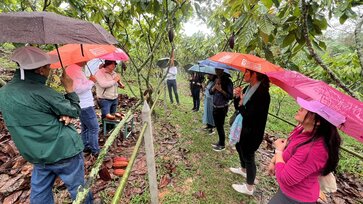
In Colombia, hundreds of stakeholders from the coffee, cocoa and palm oil sectors participated in the process. This resulted in, among other things, a national due diligence model, a roadmap for 2025–2030, and practical guidance documents to support stakeholders in operationalising due diligence. Exchanges between Colombian supply chain stakeholders and European companies were further strengthened. Joint dialogues and field visits highlighted existing good practices while creating new opportunities for collaboration and mutual learning.
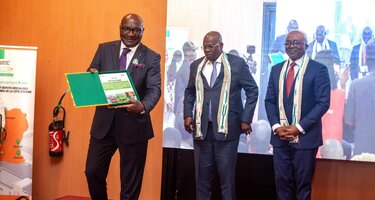
In Côte d’Ivoire, a national multi-stakeholder process brought together government, private-sector and civil-society actors. It resulted in a report, policy recommendations and a national roadmap. A Due Diligence Taskforce was subsequently established, bringing together key public and private actors to help carry the work forward.
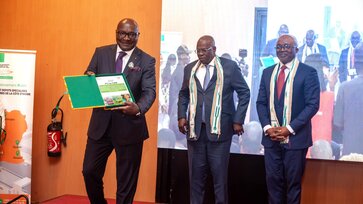
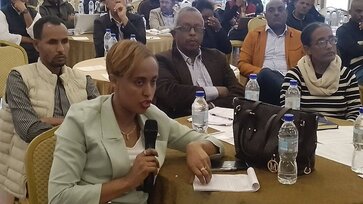
In Ethiopia, ministries, coffee cooperatives, associations, exporters, civil society and international partners came together through a national task force. Status quo and gap analyses informed recommendations on traceability and digital solutions, environmental due diligence, institutional coordination, and human and social rights.
Traceability is not only about tracking the product. It is really about building trust in the data behind the product.
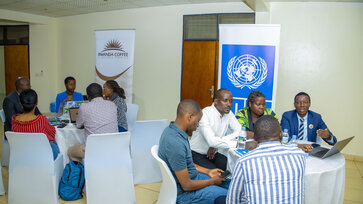
In Rwanda, a participatory process resulted in an analysis of existing national frameworks, a gap assessment, policy recommendations and a national roadmap for the coffee sector. The roadmap defines priority areas, roles and timelines, including for legality, traceability, smallholder integration and decent work.
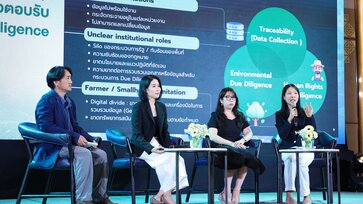
In Thailand, policy recommendations were developed together with national stakeholders, while exchange on institutional coordination and traceability was strengthened. Thailand’s experience also became part of broader regional learning, connecting different approaches from Southeast Asia and Ethiopia.
In Cambodia, a multi-stakeholder process brought together around 80 representatives from government, the private sector, producer organisations and other institutions. Discussions highlighted that advancing deforestation-free and responsible value chains is not only relevant in the context of European requirements, but can also contribute to national priorities for sustainable development and long-term competitiveness.
We have to make sure our rubber is deforestation-free… Cambodia has the opportunity to show that sustainable production and export competitiveness can go hand in hand.
While contexts and pathways differ across the six countries, common challenges and lessons that are relevant across borders have also emerged.
What have we learned together?
Experiences with operationalising due diligence requirements across different national contexts revealed several shared challenges and lessons across countries and regions.
Technology alone is not enough. Traceability depends not only on digital platforms, but also on clear institutional responsibilities, effective governance, interoperable systems and clear rules for data access, protection and use.
Inclusion needs to be considered from the outset. Smallholders are central to many of the agricultural supply chains covered by FIT for FAIR. At the same time, high costs, complex technologies, limited digital access, informality and different forms of land tenure can create barriers.
Smallholders are the foundation of the supply chain ecosystem. We need to provide awareness training, simple tools and an easy onboarding process to build trust and create participation.
The experiences therefore underline the importance of accessible, context-specific solutions that reflect rural realities and avoid placing disproportionate burdens on smaller or potentially vulnerable actors.
The Latin American exchange, for example, highlighted that informality is often linked to structural factors such as low incomes, family-based production and seasonal labour. Differentiated and inclusive approaches are therefore important to avoid reinforcing existing inequalities or excluding vulnerable actors from international markets.
Another key lesson is that there is no blueprint.
Some countries rely more strongly on government-led systems, others on cooperative structures, legal and policy processes, or technological solutions. It is precisely this diversity that makes exchange between countries valuable.
From national processes to shared learning

As FIT for FAIR progressed, exchange across borders became an increasingly important part of the project.
The International Trade Centre (ITC) designed and facilitated cross-country learning and exchange formats, connecting experiences from different countries and regions.
A regional exchange brought together Colombia, Costa Rica, Ecuador and El Salvador to discuss shared experiences related to zero deforestation, human rights, informality, traceability, data governance and the inclusion of smaller producers.
Another exchange connected Thailand, Indonesia, Malaysia, Vietnam and Ethiopia. Different experiences with national traceability systems, governance, producer identification and smallholder integration demonstrated how solutions developed in one context can provide useful impulses elsewhere.
Traceability is not only about technology. It is also about governance, coordination, building trust and collaboration between the actors.
Countries do not need to start from zero. Experiences and solutions from other contexts can provide valuable insights when adapted to national circumstances. Partner countries brought their own experiences, existing systems and solutions into the exchange formats. In June, the final Cross-Country Learnings Webinar brought together experiences from the six FIT for FAIR countries and the regional exchange formats.
Towards zero-deforestation through partnership
The results of the first six country processes would not have been possible without the partners, institutions and stakeholders who anchored and shaped FIT for FAIR in their respective national contexts. Together, they developed practical approaches to support stakeholders in operationalising due diligence for deforestation-free and sustainable value chains.
We thank the Conseil National des Exportations (CNE) in Côte d’Ivoire, the Ethiopian Coffee and Tea Authority (ECTA) in Ethiopia, Confecámaras and Preferred by Nature in Colombia, EuroCham Cambodia, the United Nations Development Programme (UNDP) in collaboration with the National Agricultural Export Development Board (NAEB) in Rwanda, and the Thailand Environment Institute (TEI) in Thailand.
Together with government institutions, producer organisations, representatives of the private sector, civil society and academia, they convened relevant stakeholders and helped ensure that analyses, recommendations and next steps build on existing structures and are grounded in national realities.
From six countries to a growing network
The experiences demonstrate the value of nationally anchored partnerships, inclusive multi-stakeholder processes and direct exchange between countries. They have also created a growing body of experience on which the next phase of FIT for FAIR can build – from operationalising due diligence requirements and developing policy recommendations and roadmaps to strengthening institutional coordination and advancing approaches to traceability, data governance and inclusion.
New partner countries will therefore not be starting from zero. At the same time, they will bring their own experiences, pe rspectives and solutions, further enriching the network and creating new opportunities for mutual learning.
The first six country processes are coming to a close – but collaboration continues. Building on the experiences and lessons learned, FIT for FAIR is now entering its next phase. Stay tuned!