Working towards Responsible Purchasing Practices to promote Living Income in the Coffee Sector
Key actors in the Peruvian coffee sector came together in Lima this May to develop a common understanding on responsible purchasing practices, identify different perspectives and challenges as well as map impacts of purchasing and sourcing practices through the supply chain. The active collaboration of key actors and perspectives shared will inform the development of sector guidelines for responsible purchasing practices.

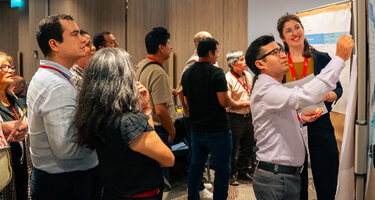
With the aim of promoting responsible purchasing practices that help to improve decent incomes for coffee-growing families, a workshop titled ‘Towards Responsible Purchasing Practices’ was held in Lima on 15 May. The event was organised by the German Development Cooperation (GIZ) as part of the German Retailers’ Working Group project and brought together more than 60 representatives from the private sector (including exporters, traders, and representatives of international financial institutions and industry associations), public institutions like the Ministry of Agricultural Development and Irrigation of Peru (MIDAGRI), producer organisations, international cooperation bodies and civil society.
The opening session was attended by high-level officials who emphasised the institutional importance of the project. Nicole Maldonado, Head of Cooperation and representative of the German Embassy, together with Franklin Suárez Gómez, Director of Agricultural Development and Agroecology at MIDAGRI, and, by virtual means, Laura Meissner, representative of the German Retailers’ Working Group, highlighted the importance of promoting more responsible and sustainable supply chains that recognise the work of producer families and help strengthen social, economic and environmental conditions of the coffee sector.


During the main part of the workshop, participants explored the concept of responsible purchasing practices in depth and analysed how these principles can be applied throughout the coffee value chain. The session helped to build a shared understanding of the importance of moving towards more sustainable and inclusive commercial relationships, aimed at ensuring a living income for farming families.
Discussion groups assessed the direct impact of purchasing practices on coffee producers’ incomes and identified the different perspectives and challenges faced by each supply chain actor. Participants’ contributions will help inform the development of sector guidelines on responsible purchasing practices.
This event marks a significant sep in the coordination between the Peruvian Government, German Cooperation, European retailers and other stakeholders in the coffee value chain. The active participation of these key actors represents a joint commitment to promoting more responsible and sustainable supply chains and dedication to the strengthening of social, economic and environmental conditions in the coffee sector.