Strengthening Dialogue and Responsibility: Takeaways from Colombian Stakeholders
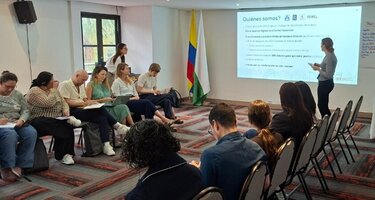
On 3 March 2026, key actors from the banana supply chain convened in Medellín, Colombia, to reflect on progress towards living wages in the country and to define priorities for the next phase. The workshop marked the transition from project implementation to the sustainable continuation and embedding of relevant activities.
Participants – including producers, exporters, industry associations, international organisations, and Kaufland as a representative of the German Retailer Working Group – noted that the process initiated by the project “Towards Living Wages in the Banana Sector” has reached a high level of maturity. This is reflected in stronger collaboration, accumulated experience, and greater alignment among stakeholders on the topic of living wages.
A key outcome is the now well-established dialogue with retailers, which has led to a better understanding of production realities and enabled closer trading relationships. These achievements now need to be consolidated; participants therefore discussed how to sustain and further leverage the progress made – particularly beyond the end of the project.
Progress with tools and mechanisms
Thanks to the project activities, producers have been strengthened in improving the quality of wage data collected through the IDH Salary Matrix, thereby increasing transparency in wage payments, according to unanimous feedback from the workshop. At the same time, participants highlighted that challenges remain. In particular, the need for a standardised verification tool was emphasised in order to better respond to the various requirements faced by producers. There is also an ongoing need to further harmonise data collection processes to ensure consistency and comparability.
The relevance of a risk-based approach to the collection and verification of wage data was also underlined, as it would take into account existing mechanisms such as collective bargaining agreements, national legislation, and labour inspection systems. Premium payments, so-called “voluntary contributions,” were identified as an important mechanism. However, participants stressed that such a system can only serve as a temporary solution and that more stable pricing systems must be established in the long term.
Price and coordination as determining factors
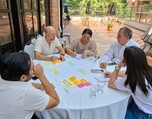
Cost differences between producing countries were again identified as a central issue. Participants expressed concerns about potential competitive disadvantages and possible discrimination based on the origin of bananas sold in the EU. These concerns were addressed and clarified during the workshop.
From commitments to implementation
A key demand is that voluntary commitments must translate into concrete actions. This requires stronger alignment between sustainability objectives and commercial decisions, more intensive coordination along the value chain, and more robust impact measurement.
Ensuring that workers are directly reached when wage gaps are monetarily closed is essential. At the same time, participants emphasised that more effective communication of results is crucial to further strengthen impact and credibility.
Ensuring continuity beyond the project
Looking ahead, discussions focused on how to sustain and secure progress in the long term. This includes clearly defining roles and responsibilities, further strengthening existing dialogue structures, and deepening the involvement of the public sector to anchor progress within national systems. In this context, the World Banana Forum was reaffirmed as the key global platform for dialogue on living wages in the banana sector. At the same time, stakeholders expressed strong interest in complementing this framework with more continuous and closely coordinated exchange formats to support implementation and follow-up at regional and national levels.
Call for continued engagement
The workshop concluded with a clear message: progress towards living wages can only be sustained through continued and strengthened dialogue across the entire supply chain. Shared responsibility is key – all stakeholders are equally called upon to remain actively engaged in advancing living wages in the Colombian banana sector.
Looking ahead, participants identified three key areas for action: first, identifying an institutional structure that can take over GIZ’s role in facilitating and mediating dialogue with retailers, thereby ensuring continuity and commitment; second, establishing a lean but robust impact measurement system in which key stakeholders jointly take responsibility for tracking concrete progress – particularly in closing wage gaps; and third, continuing collaboration with the International Labour Organization (ILO) to further strengthen capacities for social dialogue.
Taken together, these steps provide a clear framework for consolidating progress to date and supporting the long-term scalability of living wage approaches in the banana sector.