Innovations in Cocoa Communities: Training in Desmodium Production
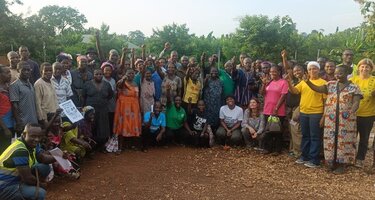
More than 370 cocoa farmers in the Ashanti Region are learning how to grow the medicinal plant Desmodium that can improve livelihoods and create new income opportunities. Through hands-on training in Desmodium production and multiplication, farmers are gaining practical skills to diversify their farming activities and strengthen household resilience.
By Francis Dadzie Mintah
Farmers Learn a Valuable New Crop
The Sustainable Cocoa Programme (SCP), is implemented by GIZ through SASI in partnership with the Three Mountains Cocoa Cooperative and COCOBOD’s Health and Extension Division. It has successfully completed a sensitization and training exercise on Desmodium production across five cocoa-growing communities in the Ashanti Region. A total of 371 farmers participated in the training, comprising of 59% men and 41% women. The initiative forms part of the SCP’s Living Income pillar, which promotes innovative and sustainable farming practices. It helps farmers improve productivity, diversify income sources, and enhance household welfare.
Economic Importance of Desmodium
Desmodium is an economically important legume that improves soil fertility through nitrogen fixation, provides high-quality livestock feed, suppresses weeds, conserves soil and moisture, and enhances crop productivity. It also possesses antioxidant, anti-inflammatory, hepatoprotective, and antimicrobial properties and has been widely used in traditional medicine for the management of conditions such as asthma, bronchitis, liver disorders, malaria, diarrhea, and inflammatory diseases, making it valuable for pharmaceutical research. In Ghana, Desmodium supports sustainable cocoa production and climate-smart agriculture, helping farmers meet the sustainability and deforestation-free requirements of German and European markets while strengthening rural livelihoods and export competitiveness.
Practical Skills for Sustainable Livelihoods

During the training sessions, farmers learned about Desmodium’s unique characteristics, medicinal properties, and value as a companion crop. Facilitators also demonstrated simple and effective techniques for planting and multiplying the crop. These practical sessions equipped farmers with the knowledge and skills needed to establish their own planting materials and expand cultivation in their communities.

Strong Participation and Knowledge Sharing
The training generated strong interest and active participation among farmers. Participants asked questions, shared experiences, and exchanged local knowledge throughout the sessions. According to Claudia Maier, Programme Coordinator of the Sustainable Cocoa Programme, “The sensitization exercise was characterized by active farmer participation. Participants engaged facilitators through questions and discussions, while also sharing their own experiences and local knowledge. This interactive approach fostered peer learning and strengthened understanding of the crop’s potential benefits.”
Building Ownership and Long-Term Impact
GIZ-SCP emphasized the importance of ensuring that farmers understand and take ownership of the initiative. “It is important that farmers on the project own the initiative. This should stem from a personal understanding of the project and its perceived impact. That is why this sensitization exercise was conducted. The engagement and feedback received have also provided valuable insights for future activities,” said Akosua Ayeyi Boateng, Technical Advisor, GIZ-SCP.
Supporting Resilient Cocoa Communities
The training has provided encouragement toward the adoption of improved farming practices, strengthened farm resilience, and created additional livelihood opportunities for cocoa-growing households. By promoting Desmodium cultivation, the GIZ-Sustainable Cocoa Programme continues to support farmers in building more resilient farming systems while improving incomes and livelihoods across Ghana’s cocoa sector.