INA-Stakeholder Meeting 2023
An article by Jennice Radant
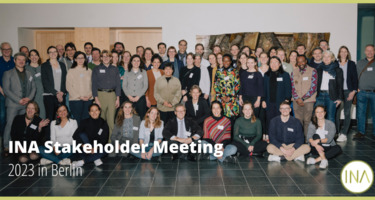
Once again this year, around 80 stakeholders from civil society, the private sector and politics met in Berlin for two days to discuss greater sustainability in global supply chains.
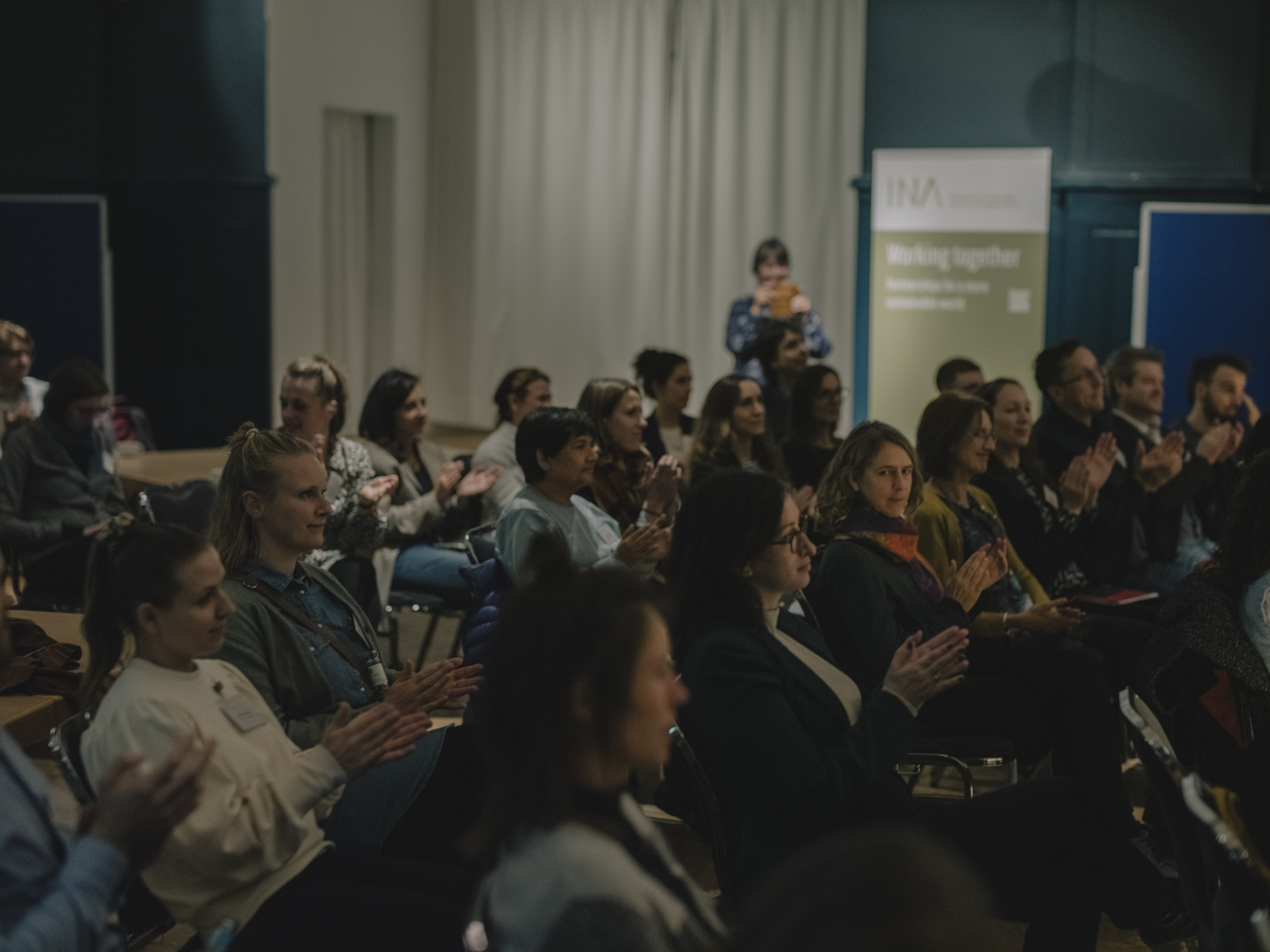
Lively chatter fills the room. 80 people face each other in anticipation. They each have two minutes to get to know the person opposite of them. Which questions are relevant? What do I want to find out? This is how the two-day INA stakeholder meeting begins on November 6. The event was organized by the Initiative for Sustainable Agricultural Supply Chains (INA) in close cooperation with the Global Project Sustainability and Value Added in Agricultural Supply Chains (GV AgriChains), the Fund for the Promotion of Innovation in Agriculture (i4Ag) and the Sustainable Agriculture for Forest Ecosystems (SAFE) project.
The main focus of the meeting was the exchange between the stakeholders, learning from each other and creating joint efforts. Here, the perspective of the producing countries was particularly important. Discussions were held on key future topics such as climate change, digitalization and just transition, as well as living wages and gender. In addition, various stakeholders shared their knowledge and experience of the legal framework for due diligence and its implementation.
„Find positive examples of change and share them so that others will get inspired.”
Corporate Due Diligence and Deforestation-free Supply Chains
This year's meeting kicked off with a speed dating warm-up and an overview of current key topics like biodiversity, climate, people, gender, living incomes and wages and digitalization. As EU representative, Carla Montesi from the Directorate-General for International Partnerships (DG INTPA) joined virtually and thanked the BMZ for its efforts to work with the EU Commission in the global Team Europe Initiative (TEI) on deforestation-free supply chains. In this regard, she emphasized in particular that it is not enough to follow the "tick-the-box" approach to achieve impact with the EUDR and the CSDDD, but that investments must be made in infrastructure - especially in supply chains that are strongly dependent on smallholder farmers. Montesi also highlighted the important role of initiatives such as the INA, GV AgriChains and I4Ag/SAFE, which provide expertise on important topics such as traceability, deforestation-free agricultural supply chains and living incomes. In response to the question "How can corporate due diligence be promoted in agricultural supply chains?", keynote speakers from the Union for Ethical Biotrade (UEBT), German Coffee Association and Equal Origins highlighted the importance of risk assessment tools, well-functioning grievance mechanisms - especially for smallholder farmers - and the urgency of focusing on gender equality through gender-transformative approaches.
Digitalization for and with producers
In a lively panel discussion, representatives of smallholder farmers and partners from Colombia, Peru, Kenya and the United Kingdom explained the benefits of digitalization for producers. It became clear that digitalization holds great potential for traceability and the establishment of transparent agricultural supply chains - but only if producers are actively involved in the digitalization process. Moreover, it was emphasized that most producers do not yet benefit sufficiently from the data they collect to compensate for the additional costs of traceability or even benefit from it. For traceability to be worthwhile for producers in the future, dialog between the various stakeholders must be clearly established.

Ideas are easy, implementation is hard.
In her closing remarks, Lisa Kirfel-Rühle, on behalf of the BMZ, emphasized the importance of agricultural supply chains for achieving the SDGs and the important role of multi-stakeholder partnerships to increase sustainability in agricultural supply chains and ensure that EU regulations have an impact and improve the working and living conditions of people in partner countries.
To close the day, 17-year-old singer/songwriter Tobias Burger - participant of the Engagement Global Song Contest - gave a thought-provoking acoustic concert consisting of his own songs and covers. In an interview on stage, he remarked how easily new ideas are born, but that the realization of these ideas often proves to be a challenge.
After the musical interlude, there was plenty of time to chat over mulled wine and dinner.
Day 2 with lively discussions
The second day of the stakeholder meeting began with a presentation by Olam International on the question of how agricultural value chains need to be designed from a climate perspective in the future. Using the example of a joint Olam/i4AG project in the rice supply chain, it became clear that innovations to mitigate climate change can only be successful if they directly increase the income of smallholder farmers.

All activities must go hand in hand with increased income.
The presentation was followed by a World Café exercise where three participants presented their solutions to tackle the challenges of climate change in agricultural supply chains. KOFAR, a Kenyan company, presented a system for recycling plant waste to improve production quality and environmental sustainability and increase the resilience of smallholder farmers to climate change. The think tank Climate & Company focused on the importance of involving the financial sector to realize sustainability efforts in agricultural supply chains. The Ethical Tea Partnership (ETP) made it clear that adaptation to climate change cannot be tackled in isolation. It must be driven by gender equality, as women are disproportionately affected by climate change. Economic aspects also play an important role, as smallholder farmers are constrained by limited incomes and are therefore unable to test new techniques to mitigate climate change.

We have solutions, we just need some support.
In a controversial fishbowl discussion, participants were invited to discuss the risk that the EU regulation on deforestation-free supply chains (EUDR) excludes smallholders from the supply chain. The topic of whether the implementation of due diligence regulations is too costly for small and medium-sized enterprises was explored. The participants agreed that it is easier for companies to source certain raw materials from large producers than to support smallholders in complying with the new regulations. It became clear that companies need to intensify the dialog with smallholders and support them in complying with regulations, even if this leads to higher costs for the companies. The need for long-term relationships with smallholder farmers was also emphasized in a presentation by Fairtrade Germany and Forum Fairer Handel, which outlined how Fairtrade is helping their farmers to comply with the new EU regulations.

Dialogue is an essential tool to find out what we need to do.
Several tools to promote sustainability in agricultural supply chains were presented along the way, such as the Digital Integration of Agricultural Supply Chains Alliance (DIASCA) platform by INA’s digitalisation team and the elan! tool by Oroverde to promote the implementation of deforestation-free supply chains and others. The day concluded with an open space format where stakeholders had the opportunity to present or further develop their ideas for new projects and discuss possible collaborations and solutions.
In her closing remarks, Lisa Kirfel-Rühle encouraged participants on behalf of BMZ to continue to actively participate in INA and other projects offered by BMZ through GIZ, as cooperation projects have the potential to trigger positive innovation. She emphasized the importance of engaging partner countries in the development of sustainable agricultural supply chains, with gender equality and inclusion of marginalized groups among the key success factors. She warmly thanked all participants, especially those who had traveled from abroad to attend the meeting in Berlin, as their presence was very valuable and brought different perspectives and opinions to the productive discussions.