How coffee organisations cope with the effects of climate change
While coffee production in Peru faces growing challenges, a distinct set of responses is emerging in the Selva Central to address these problems. Producers are adopting new practices to improve productivity, resilience and farm management. Through training, demonstration plots and knowledge sharing between farmers, tangible results have already begun transforming coffee production to be more sustainable.
Coffee production in Peru faces increasing challenges. According to the 2025 baseline study of the German Retailers Working Group, increased incidence of pests and diseases associated with the effects of climate change, continually increasing labour costs, and unstable coffee prices are some of the main challenges. These factors are directly affecting the productivity of farms, the profitability of the crop and the incomes of producing families.
Facing these challenges, six coffee organisations in the Selva Central of Peru, in collaboration with the German Retailers Working Group (dm, Kaufland, Lidl and REWE Group), are piloting strategies to improve the efficiency and resilience of their farms in a sustainable manner. The project recognises the progress already made (such as technical management and increases in coffee quality and productivity) and, at the same time, emphasizes the ongoing need to strengthen local capacities to achieve lasting change. In this context, technicians from the six organisations have assumed a key role, leading training processes, promoting good agricultural practices and facilitating collective learning spaces.
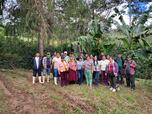
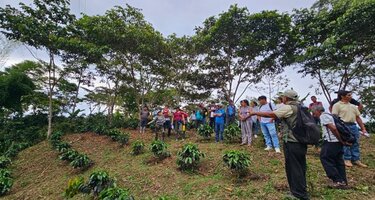
The strategy is structured into three complementary pillars. The first pillar consists of Farmer Field Schools (ECAs), which promote practical learning on topics such as pest management, soil health and climate adaptation. The second is the use of demonstration plots, where traditional practices are compared with improved alternatives, facilitating informed decisions in the field. The third is the transfer of technology between producers, helping to strengthen local leadership and consolidate learning networks across different organisations.
The pilot's progress to date is encouraging; the involved producers are already utilizing the new practices on their farms. As part of the capacity building process, eleven field schools have been implemented, and six demonstration plots have been set up: two for weaving and fertilisation management, two for pest and disease control, and two for farm business management. Likewise, five processes of technological exchange between producers have been promoted at the regional level, strengthening collective learning and facilitating the adoption of innovations.
These results show not only improvement in production, but also organisational strengthening, reflected in greater interaction between members, technicians and cooperatives.

