Strategic Dialogue Between Key Actors in the Honduran Coffee Sector
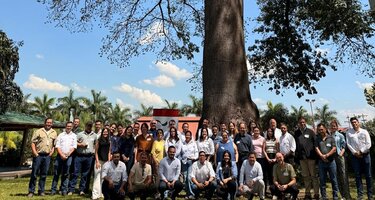
GIZ coordinated a Stakeholder Workshop in Honduras on March 6th, 2026, as part of the German Retailers’ Working Group on Living Income in the Coffee Sector. The workshop brought together various stakeholders and actors relevant to the coffee sector, fostering exchange and dialogue on living income in the coffee sector.

As part of their efforts to advance living incomes in the global coffee supply chain, the German Retailers Working Group hosted a workshop in Honduras on Friday, March 6, 2026.
Bringing together key Honduran actors, including representatives from the public sector and local partners from the coffee sector, the event focused on fostering exchange, building a shared understanding of the living income concept, and discussing the project’s implementation strategy.


The day began with welcoming words from the German Embassy, the Secretariat of Agriculture and Livestock, and a representative of the German Retailers Working Group. The speakers emphasized their shared commitment to project implementation, which focuses on achieving living incomes in the Honduran coffee sector. Establishing a solid conceptual framework for living incomes was a central component of the workshop. Organizers presented a detailed analysis on the concept of living income within the coffee supply chain. The session also explored the results of the recently published baseline study, presenting conclusions on producers’ sources of income, income distribution among the analysed households, and recommendations for closing living income gaps. Based on this context, the project’s objectives were presented: responsible purchasing practices, resilient and efficient production systems and professionalized producer organizations, and the creation of a joint agenda and cooperation with initiatives at the national, regional, and international levels.
In the afternoon, the group shifted focus toward practical implementation. The implementation roadmap was presented, highlighting three strategic objectives and a cross-cutting approach focused on empowering populations in vulnerable situations. Building on the framework offered by the implementation roadmap, participants reviewed and discussed key milestones and critical activities required for success. Designed as a collaborative session, technical and strategic ideas shared by participants were collected to offer a base for strengthening the project’s implementation plan by ensuring compatibility with on-ground realities of Honduran coffee-growing communities.
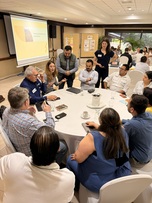
At the end of the workshop, the conversation turned to shared responsibility. The group identified specific areas for institutional collaboration, emphasizing that achieving living incomes requires a coordinated effort across the entire supply chain — from retailers in Europe to producers in Central America.
The day concluded with a synthesis of the workshop’s key conclusions. Participants reaffirmed their collective commitment to advancing living incomes and defined immediate next steps for the project.
The workshop in Honduras marked a crucial moment for the project between the German Retailers Working Group and local partners. By combining conceptual clarity with strategic planning, the initiative aims to create a sustainable model that ensures coffee producers receive a fair share of the value their work creates.