Safer food, fewer losses: Innovative biomass dryer launched in Kenya
Kenyan farmers are fighting dangerous aflatoxin contamination in their harvest. A new biomass dryer, launched by the development partnership project with Saving Grains 301 GmbH as part of the Fund for the Promotion of Innovation in Agriculture (i4Ag), offers a safe and efficient way to dry grains and other crops, thus preventing spoilage and post-harvest losses. With expert testing underway and drying services now available locally, this innovation can significantly boost food safety and improve farmers’ incomes.
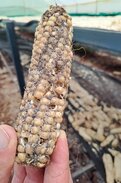
Aflatoxin is a poisonous and carcinogenic toxin produced by certain fungi that can grow on foodstuff such as maize and other grains like sorghum and rice, soybeans, peanuts and many more. When harvested food is stored improperly, aflatoxin can develop, spoil it and make consumption hazardous. These post-harvest losses are a major problem in many countries around the world. Making sure that food is properly dried before storage is one important way of preventing this spoilage.
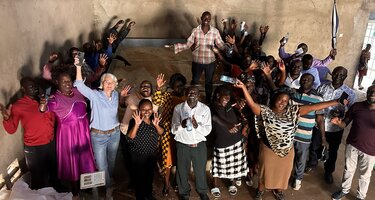
In an effort to support farmers in Kenya in this endeavor, the project “Reducing Post-Harvest Losses and Utilizing Agricultural Residues” has installed and tested an innovative biomass dryer. The dryer has now been officially launched at an event with all participating partners.


The dryer uses heat generated from a biomass furnace and an electrical fan to efficiently and evenly dry foodstuff by blowing the hot air into the plenum which is the chamber beneath the drying bed with the product. It can be used for all kinds of grains, but also other crops including pulses, chilli pepper, coffee, etc. The temperatures produced by the dryer have been tested and confirmed not to denature grain in cases where farmers may wish to replant. It therefore presents a safe, efficient, and affordable drying option.
In the coming weeks, the team will be testing various biomass fuels to determine the most effective and cost-efficient choice. We are pleased that Dr. Joseph Oppong Akowuah, a professor from the Kwame Nkrumah University of Science and Technology (KNUST) in Ghana, who developed this groundbreaking technology will be leading data collection and sharing insights on performance, efficiency, and usability. This evidence will be key in guiding wider adoption and ensuring farmers gain the maximum benefit from this technology.
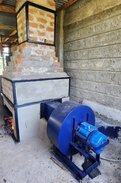
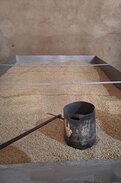
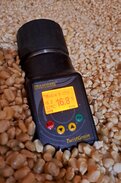
The biomass dryer is located in Sirisia community of Bungoma County in Western Kenya and is being operated by Saving Grains, who from now on is offering drying services to farmers in the region. The dryer is only one aspect of the efforts by the project to promote better post-harvest management in Kenya and Ghana. Other activities include disseminating knowledge on better post-harvest handling, promoting hermetic storage options and innovative moisture measuring methods. This concerted effort allows farmers to save more of their harvest, improve their food security, reduce health risks and improves market access.
This project is part of the Sustainable Agricultural Supply Chains Initiative (SASI). The SASI promotes green, fair and inclusive agricultural supply chains. Together with politics, business and civil society, it puts sustainability issues on the agenda and shapes the political discourse. The initiative is implemented by GIZ on behalf of BMZ.