Learning from Practice: Sustainability in Northern Cambodia's Rice Supply Chain
Through its third funding round, the Due Diligence Fund is funding a sustainable rice project with IBIS Rice in Northern Cambodia and builds directly on practical experience from the first two rounds.
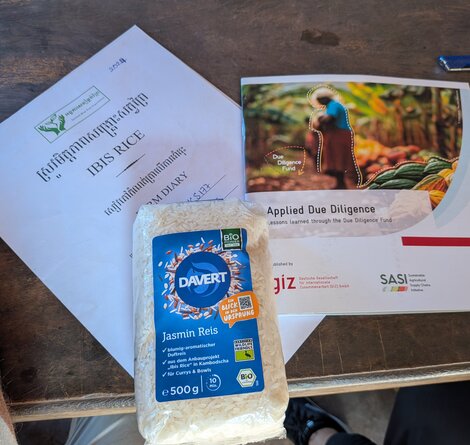
Supported by the third round of the Due Diligence Fund, this project with IBIS Rice builds on experiences with our previous successful DDF projects, captured in our new learning report “Applied Due Diligence”. These learnings are already shaping how the current phase is designed and implemented: iterative in nature, with room for adjustments throughout project implementation. Learning, applied – not archived.
💡This reflects one key takeaway from the report: effective due diligence must evolve as new insights from the field emerge.
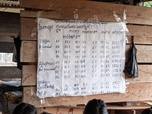
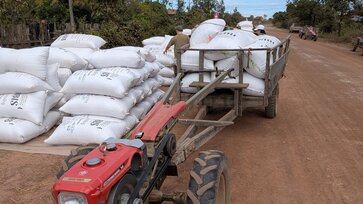
The rice produced here is organic and fully traceable, enabled through cooperation with Seedtrace. Farmers receive prices well above local market averages – an essential step towards a living income. Still, conversations with farmers underline how fragile progress can be: price volatility makes planning difficult, even in good harvest years, and additional income is often needed first and foremost to cover education costs.
💡 This directly reflects another core lesson from the report: mitigation measures only work when they are grounded in local economic realities, not abstract assumptions.
We are delighted with the program because it allows us to sell our paddy at a higher price.
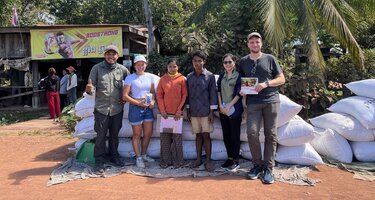
Key to understanding local realities is the direct dialogue. Sitting down with farmers like Lou and Dy, together with the Ibis Rice team, helps surface local realities that often remain implicit – from production trade-offs to income risks. Making this context explicit is a core part of applied due diligence and essential for effective co-steering – exactly what the report identifies as meaningful engagement with rightsholders.
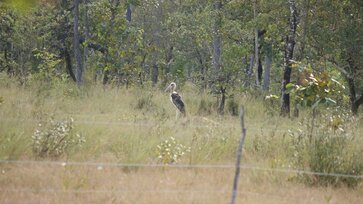
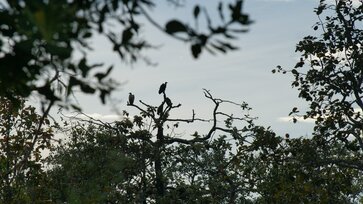
That matters far beyond the farm gate. In this critical biodiversity hotspot, viable farm incomes help reduce pressure from illegal hunting and logging, contributing to the protection of some of the last populations of the giant ibis, the lesser adjutant, and endangered vultures.