From Shrimp Ponds to Clean Villages: Ms. Yến’s Story of Circular Change in Sóc Trăng Province, Vietnam
In Sóc Trăng a shrimp woman combines waste sorting and shrimp-cracker production to create income for local women and a cleaner environment for her community.
Born and raised in Soc Trang, Ms. Nguyễn Thị Yến has long been familiar with the rhythms of shrimp farming in the Mekong Delta. Her family has farmed white-leg shrimp for years, but, as she recalls, “the income was never stable, sometimes good, sometimes nothing at all.” To make ends meet, she also ran a small rice-box shop and sold local specialties like shrimp crackers.
While tending her family’s ponds, Yến began to notice another problem – waste.
“There was so much,” she said. “Sludge, wastewater, shrimp shells, and plastic packaging, we used to throw everything in one place.” Over time, the ponds and nearby roads became littered with plastic and organic waste, affecting both the environment and the community’s health.
Turning Waste into Opportunity


That began to change when Yến joined training sessions under the Innovation for Agriculture (i4Ag) project implemented by GIZ. Through these sessions, she and other women farmers learned how to separate and manage waste properly – a small act that created a big impact. “After learning from the experts, I realized we could sort bottles, plastic, and packaging and sell them to the local cooperative,” Yến explained.
Now, her women’s group (five members) collects and sorts recyclable materials every two weeks. The cooperative aggregates and sells them to recycling buyers. “Ten percent goes to our women’s group to cover meeting costs, and 90 percent to the sellers. It’s fair, and it keeps our neighborhood clean,” she said proudly.
Thanks to project support, Yến’s cooperative received waste-sorting bins and bags to separate organic from non-organic waste. “Our homes are cleaner, the roads have no more litter, and even our shrimp ponds are more hygienic,” she shared. “We earn a little extra, but more importantly, we live in a greener environment.”.
From Shrimp to Shrimp Crackers
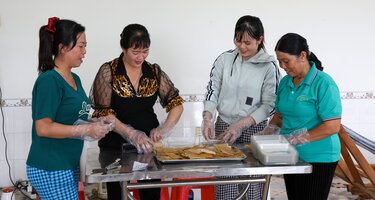
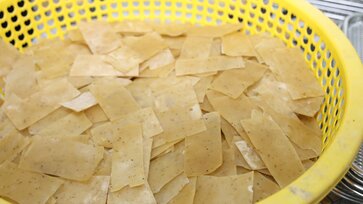
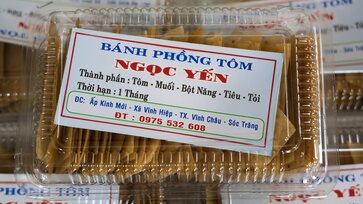
Building on that momentum, Yến turned her attention to another kind of “product”: underused shrimp resources. She began producing shrimp crackers, a traditional Mekong snack that adds value to local shrimp harvests.
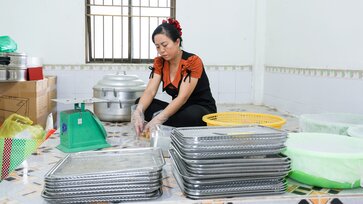
At first, she relied on the sun for drying, limiting production to six months of the year. “During the rainy season, I had to stop completely,” she said. Recently, with project support, she received a drying machine, enabling year-round production. “Now I can make and sell shrimp crackers in any season,” she said. “It’s made a big difference, my income is more stable, and several other women have joined me, earning extra money too.”
Empowering Women, Strengthening Communities
For Yến, the change goes beyond income. Her initiative is helping other women gain confidence and new skills, while promoting cleaner shrimp-farming practices. “My husband sees how much I can do now,” she said with a smile. “He trusts and supports me more. That makes me even more motivated.”
Looking ahead, Yến hopes to expand her small business, achieve OCOP certification, and bring her shrimp crackers to wider markets. “It would mean more jobs for local women and better use of every shrimp we raise,” she added.
A Local Model of Circular Economy
By linking waste management, women’s empowerment, and value-added processing, Ms. Yến’s story shows how small community actions can create big environmental and economic change. With support from the i4Ag project and GIZ, she has turned what was once shrimp farm waste into opportunities for cleaner villages, stronger livelihoods, and a more resilient coastal future.