EU Delegation Witnesses Ghana’s Cocoa Traceability in Action
Ghana’s cocoa sector is proving that sustainability and transparency can move from policy discussions to real-world practice. This was the key takeaway when Catarina Vieira, Member of the European Parliament, followed the journey of cocoa from farm to port through Ghana’s groundbreaking digital Cocoa Traceability System. The European Union and the German Federal Ministry for Economic Development and Cooperation (BMZ) supported the Ghana Cocoa Board through GIZ to ensure that cocoa exported from Ghana is traceable, deforestation-free, and compliant with the European Union Deforestation Regulation (EUDR).
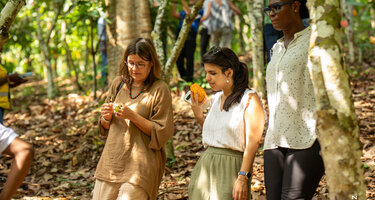
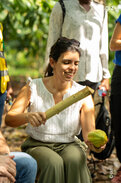
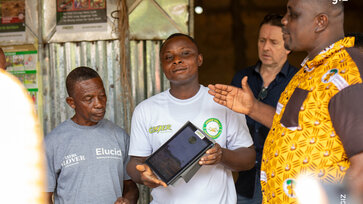
In her company were officials from Ghana Cocoa Board, European Union Delegation to Ghana, GIZ Ghana, and European Forest Institute. During her visit, Ms. Vieira saw firsthand how technology and collaboration are reshaping one of the world’s most important agricultural supply chains. Her field-to-port tour began in cocoa-growing communities in Suhum, in the Eastern Region, where she engaged with farmers and observed how farms are digitally mapped and geolocated. This process ensures cocoa is sourced from deforestation-free areas and provides a transparent record of production origins. She then followed the beans through the purchasing stage, where transactions are digitally recorded and quality control checks are mandatory before cocoa can move further along the chain. At the Ghana Cocoa Board’s warehouse facility in Tema port, the delegation witnessed how export documentation is digitally linked to farm-level data, creating an end-to-end trail that supports compliance with international sustainability standards.
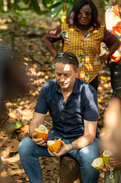
Strong partnerships enable the fight against deforestation
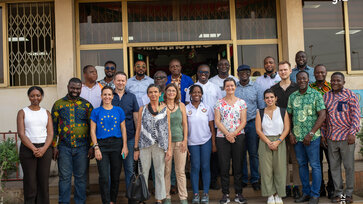
Ms. Vieira expressed optimism about what she saw on the ground. “I was very happy to see all the different stakeholders working together to make sure that this system is in place. Back home in Brussels, I will spread the message that yes, it is feasible. If people are serious, then they can unleash a lot of energy to fight deforestation.” Her remarks signal growing confidence within European institutions that producing countries can meet stringent environmental and traceability requirements through the right mix of political will, digital innovation, and partnerships. Dr. Dirk Aßmann, Country Director of GIZ Ghana, emphasized the system’s global relevance. “It was extremely interesting to follow the entire value chain from the farm to the port and see how the traceability system works. It is one of the best systems in the world, and I am truly impressed by how seamlessly the different digital applications fit together.” The visit highlighted the strength of collaboration between Ghana Cocoa Board, development partners, private sector actors, and farmers. Together, they are building a system that not only meets regulatory demands but also promotes responsible land use, protects forests, and strengthens trust in Ghana’s cocoa on the international market.
As global pressure mounts for sustainable supply chains, Ghana’s approach is emerging as a model for other producing countries. By leveraging digital tools and strong partnerships, the country is demonstrating that traceability can go hand in hand with farmer inclusion and environmental stewardship. Ghana’s cocoa story is no longer just about production volumes; it is about leadership in sustainability. Ghana is exporting more than cocoa. It is exporting credibility, accountability, and a blueprint for the future of sustainable trade.
About the Program
The Sustainable Cocoa Program is a joint initiative of the European Union and the German Federal Ministry for Economic Cooperation and Development (BMZ), implemented jointly by the Deutsche Gesellschaft für Internationale Zusammenarbeit (GIZ) GmbH the FAO investment center, the European Forest Institute and the Joint Research Center of the European Commission.