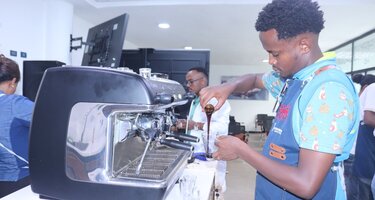
Breaking down barriers in the coffee sector: New opportunities for young people with disabilities in Ethiopia
Ethiopia’s coffee industry is expanding rapidly and is creating economic opportunities for its population. Within this context it is important that no one is left behind. People with disabilities face significant barriers in accessing coffee production and its value chain.
Ethiopia’s coffee industry is expanding rapidly and is creating economic opportunities for its population. Within this context it is important that no one is left behind. Persons with disabilities face significant barriers in accessing coffee production and its value chain.
Limited access to adapted tools and equipment, inaccessible farming environments, and transportation challenges constitute physical barriers to participation while the marginalisation of persons with disabilities undermines self-esteem and confidence. These barriers restrict their involvement in various stages of the coffee value chain, from cultivation to marketing, limiting opportunities for economic inclusion in the coffee market.
Together with the organisation Light for the World SASI and its team in Ethiopia is breaking down barriers for persons with disabilities and creating opportunities for true economic inclusion. Part of the SASI Project on sustainability and value creation in agricultural supply chains in Ethiopia (SUVASE) the CAFÉ (Creating Access for Everyone) project aims to pilot disability-inclusive practices across the coffee supply chain creating employment opportunities and empowering persons with disabilities to thrive in one of Ethiopia’s most iconic industries. These are their stories:
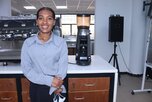
Meet Aberash Geremew, a Management graduate from Addis Ababa University. After completing her studies in 2024, Aberash faced a harsh reality: despite her qualifications, finding stable employment was nearly impossible. She relied on short-term data collection jobs, often feeling her physical impairment was a silent barrier to opportunities.
After joining the CAFÈ project, she is now one of five trainees specializing in Export Management and Documentation at the Ethiopian Coffee and Tea Authority Training Center. For Aberash, this program is more than a skill-building opportunity, it’s a gateway to independence and leadership.
“This opportunity helped me understand the practical side of the coffee sector,” she says. “It showed me that I can compete not just through recruitment, but even as a future business owner.”
Aberash’s story reflects a broader challenge: although Ethiopia is one of the world’s largest coffee exporters, people with disabilities remain underrepresented in the sector. She is determined to change that narrative.
“I want to show young people with disabilities that we can join the sector and succeed even at management levels. One day, I want to become an exporter myself and advocate for more inclusive policies.”
Through CAFÉ, Aberash is gaining the knowledge, confidence, and connections she needs to lead by example. Her ambition goes beyond personal success. She dreams of creating a ripple effect, inspiring others and shaping a coffee industry where inclusion is the norm, not the exception.
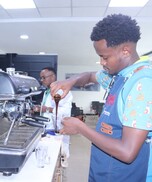
For Amanuel Tesfaye, a 26-year-old Deaf graduate of Addis Ababa University, the journey to employment has similarly been filled with obstacles. Like many young people with disabilities in Ethiopia, Amanuel faced systemic barriers limited job opportunities, lack of inclusive workplaces, and societal misconceptions about what people with disabilities can achieve.
The CAFÉ project enabled Amanuel to enroll in Barista Skills training at the Ethiopian Coffee and Tea Authority’s Coffee Training Center, a hub for coffee excellence. When he first walked into the training room, he knew almost nothing about brewing techniques or coffee artistry. Now, he confidently prepares espresso shots, masters latte art, and understands the rich heritage behind Ethiopia’s world-famous coffee.
“Ethiopia is known worldwide for coffee, but the sector hasn’t been inclusive,” Amanuel says. “I’ve never seen people with disabilities working as baristas. This training empowers me. It brings me closer to my dream of owning a coffee house and inspiring other young people with disabilities. I want to show that we can.”
Amanuel’s determination is fueled by more than personal ambition, he wants to break stereotypes and create opportunities for others. Supported by trainers, staff, and fellow students, he is not only gaining technical skills but also building confidence and a professional network within Ethiopia’s vibrant coffee value chain.
Light for the World
Light for the World, a global disability and development organization established 30 years ago, focusing on disability rights and eye health. Recognizing the importance of eye health, education, and economic empowerment, and humanitarian action, Light for the World aims to ensure no one is left behind. Operating in countries like Burkina Faso, Ethiopia, Kenya, Mozambique, South Sudan, and Uganda, the organization empowers the poorest and hardest-to-reach communities, creating lasting change. More info under: Home - Light for the World International
Inclusion matters: Integrating persons with disabilities into coffee value chains
With Ethiopia's current population of 130 million, this translates to over 22 million persons with disabilities. Notably, around 95% of these individuals live in rural areas. Moreover, Ethiopia is home to approximately 5 million small-scale coffee farming households, involving over 25 million people in coffee production, processing, and sales. Given the high percentage of persons with disabilities residing in rural areas, a substantial number of them could be integrated into the coffee farming business, thereby enhancing their employment opportunities and contributing to the industry's growth. However, this opportunity has not been fully tapped due to various reasons, including the multitude of barriers faced by people with disabilities. According to a ILO study excluding people with disabilities from the labour market can result in losing up to 7% of the national GDP in countries such as Ethiopia.