Sustainable Cotton
Innovations to strengthen climate resilience in smallholder cotton farming
The project at glance
Project description
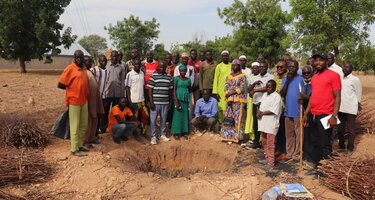
In Northern Cameroon, 45,000 smallholder cotton farmers are embracing a bold transformation, shifting from conventional practices to sustainable regenerative agricultural practices including three impactful innovations that not only bolster their resilience to climate change but also strengthen their income opportunities.
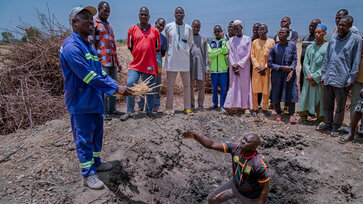
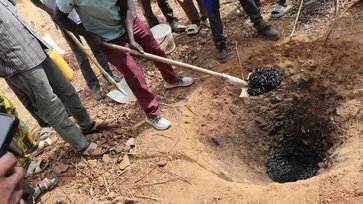
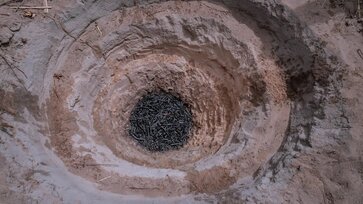
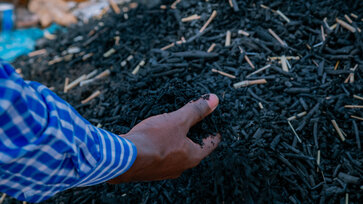
First, harvest residues that might once have been burned are now being turned into biochar, enriched with biofertilizer, to improve the soil’s fertility, water retention and carbon-storage capacity. Secondly, more climate resilient cotton varieties are being introduced, helping farmers adapt to hotter, drier conditions. Thirdly, a locally produced biopesticide derived from the oil of the neem plant and encapsulated in nanoparticles, thus increasing its UV-stability, is empowering farmers to protect their crops in an eco-friendly way.
Together, these innovations form a powerful trio: improving land productivity, reducing environmental vulnerability and opening the door to additional revenue, such as through soil-carbon credits, thus turning what was once harvest residue into long-term value.
Partner
- ICAC, the International Cotton Advisory Committee, is the only UN recognized intergovernmental commodity body for cotton and textiles and is an association of cotton producing, consuming, trading, and investing countries. Its core competence is global outreach and technology transfer. In our project, the scientific team of ICAC leads the technological-innovation aspects of soil health rejuvenation through enriched biochar, and the development of nano-biopesticides.
- CIRAD (Centre de coopération internationale en Recherche Agronomique pour le Développement) is a French agricultural research and international cooperation organization. In this project, the scientific team of CIRAD will lead the innovation on development of climate resilient cotton varieties.
- SODECOTON is the national Cameroonian cotton company. It provides services and inputs to more than 200.000 cotton farmers in Cameroon. In this project, it implements the trainings for the farmers through its extension workers to teach them about the innovations.
- IRAD (Institut de Recherche Agricole pour le Développement) is a public Cameroonian research institution that is tasked with scientific research and the promotion of agricultural development.
Achievements
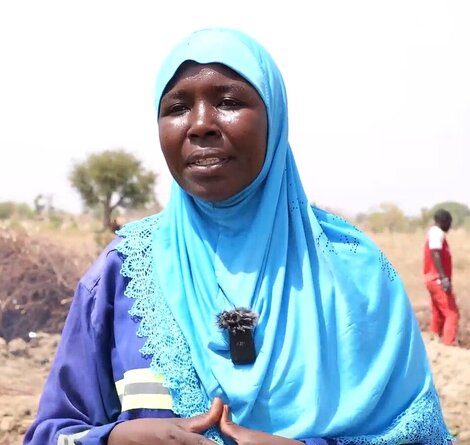
So far, approx. 7.000 farmers, among them 800 lead farmers, have been trained in the production and application of enriched biochar. These farmers were trained by 60 agricultural extension agents, that had been trained in a training-the-trainers approach.
In addition, significant yield increases of up to 100% have already been recorded on the farmers' trial plots.

Farmer on his field with biochar (left) and without (right)
Looking forward
In the next project phase, we will scale up the training activities in order to achive the goal of 45.000 trained farmers. Furthermore, a lab to produce biopesticides will be built and equipped and 50 young entrepreneurs will be trained in the production. New cotton varieties will be introduced to the farmers.
In addition, within the framework of a cooperation between the implementing partners ICAC and SODECOTON with the software company bizpando AG, there are plans to set up a platform to generate additional income for farmers through carbon credits.